Bridging Physical and Digital Access with FIDO2 Biometric Smart Card Authentication
May 21, 2026 •
Most employees already carry a card. It gets them through the front door in the morning, maybe into a server room or a restricted area, and back out at the end of the day. Physical access cards have been a standard part of enterprise identity infrastructure for decades — trusted, familiar, and already in everyone’s pocket.
What hasn’t kept pace is digital access. The same employee who taps a card to enter a building still logs into their Windows workstation with just a username and password, one of the weakest forms of authentication in use today.
FIDO2 biometric smart cards close that gap. By combining the familiar physical card form factor with an embedded fingerprint sensor and FIDO2 authentication, organizations can extend their existing card infrastructure to secure digital access, including Windows logins, Remote Desktop, and VPNs, without asking employees to carry anything new.
In this post, we’ll look at how FIDO2 biometric smart card authentication works, what sets hardware-based fingerprint cards apart, and how LoginTC brings this technology to Windows logins, a first for the authentication industry.
What is FIDO2 Biometric Smart Card Authentication?
FIDO2 is a cryptographic authentication standard built on the WebAuthn specification and CTAP2 protocol. Rather than relying on a shared secret like a password or OTP code, FIDO2 uses a public-private key pair tied to a specific hardware device. Because the private key never leaves the hardware, there is nothing to intercept, steal, or phish.
Smart cards have long been trusted for exactly this kind of hardware-bound authentication, but traditionally, they relied on certificate-based methods that require significant infrastructure overhead to manage. FIDO2 changes that. Cards built with FIDO2 support deliver the same hardware-bound security without the complexity of managing a certificate authority, making smart card authentication accessible to a much broader range of organizations.
Biometric smart cards take this further still, adding a fingerprint sensor directly onto the card’s surface. Authentication requires both the physical card and a matching fingerprint; two strong, independent factors verified simultaneously. Fingerprint data is processed and stored entirely within the card’s secure element and never transmitted externally, ensuring biometric privacy is preserved by design.
For organizations thinking about identity in terms of both physical and digital access, this model is a natural fit. The same factors that verify who enters a building, possession of a card, confirmed by a biometric, can now verify who logs into a workstation.
What are FIDO2 Biometric Fingerprint Cards?
FIDO2 biometric fingerprint cards, like Dongwoon Anatech’s Fingerprint Card, are ISO-standard smart cards with an embedded fingerprint sensor and secure element. Because they conform to the same physical and electrical standards as traditional smart cards, they work with existing card readers and access control infrastructure — no new hardware is required on the reader side.
The fingerprint sensor captures and processes biometric data on the card itself, using dedicated fingerprint recognition algorithms optimized for both speed and accuracy. Authentication happens in a fraction of a second, with no perceptible delay in the login flow.
What makes semiconductor-rooted products like Dongwoon Anatech’s Fingerprint Card distinct is the depth of the underlying hardware engineering. Dongwoon Anatech is a global fabless semiconductor company with extensive experience in analog and mixed-signal ICs. The fingerprint recognition capability in their card is built on that hardware expertise, not bolted on. The result is a compact, reliable, enterprise-grade solution designed from the component level up for identity and access applications including access control, digital identity, and secure login.
Bridging Physical and Digital Access
One of the more underappreciated challenges in enterprise security is the gap between physical and digital identity. Most organizations manage these separately. A facilities or HR system handles building access cards, while IT manages digital credentials. Employees carry both, and the two systems rarely talk to each other.
FIDO2 biometric smart cards offer a path to convergence. Because they conform to ISO card standards and work with standard smart card readers, organizations with an existing physical access card program can evaluate whether the same card form factor, or the same card entirely, depending on the implementation, can serve both purposes. The employee’s identity is verified by the same two factors whether they’re entering a building or logging into a workstation: something they have, and something they are.
This has real practical value beyond convenience. Every additional credential an employee carries is a potential vulnerability: a card that gets shared, a password that gets written down, a token that gets lost. Reducing that surface area by consolidating physical and digital identity into a single, biometrically-protected card is a meaningful security improvement, not just an operational one.
It also simplifies the user experience in environments where employees move between physical and digital access frequently, such as healthcare settings, secure facilities, or manufacturing floors, where friction in the authentication flow has real productivity consequences.
How it Works with LoginTC + Windows
LoginTC’s support for FIDO2 biometric smart cards brings fingerprint-based authentication to Windows logins, including Console access and Remote Desktop. This is a first for the authentication industry, extending FIDO2 smart card support beyond web applications and VPNs to the Windows login itself.
Here’s how the experience looks for end users.
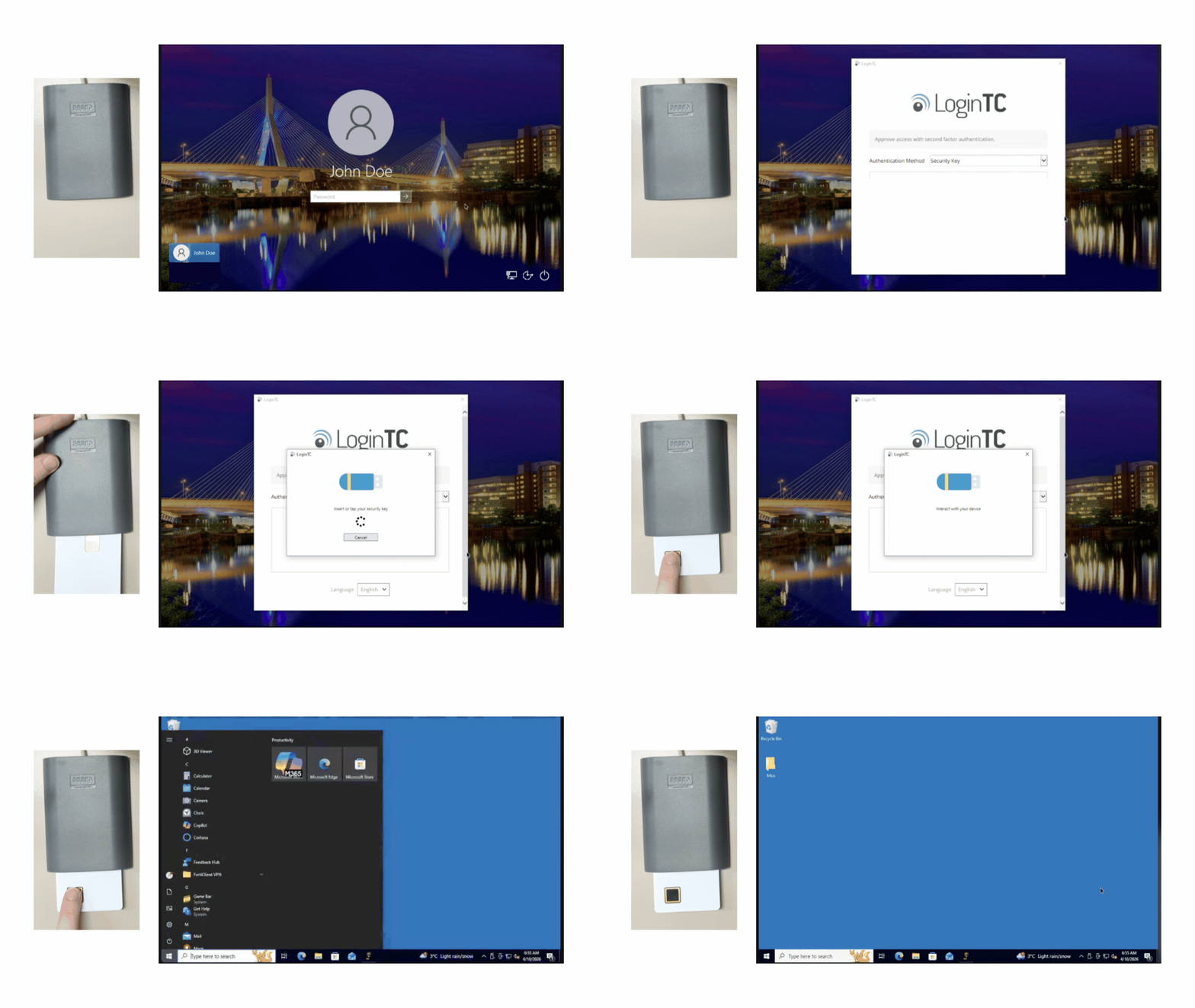
Insert to Authenticate — Windows Console
Tap to Authenticate — Windows Console
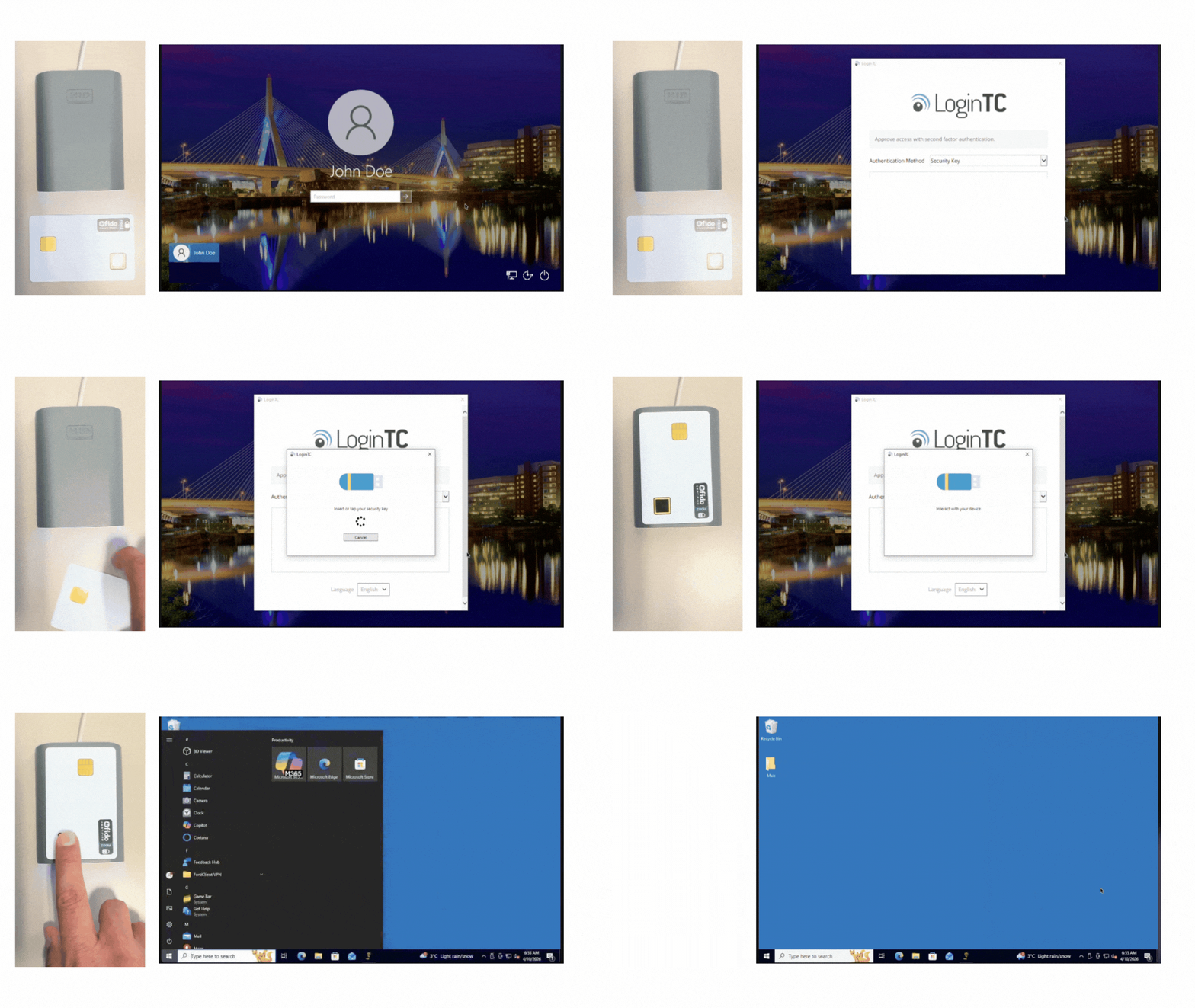
Users enter their first-factor credentials, then place their biometric fingerprint card onto a reader. The on-card fingerprint sensor confirms their identity and completes authentication, no PIN required.
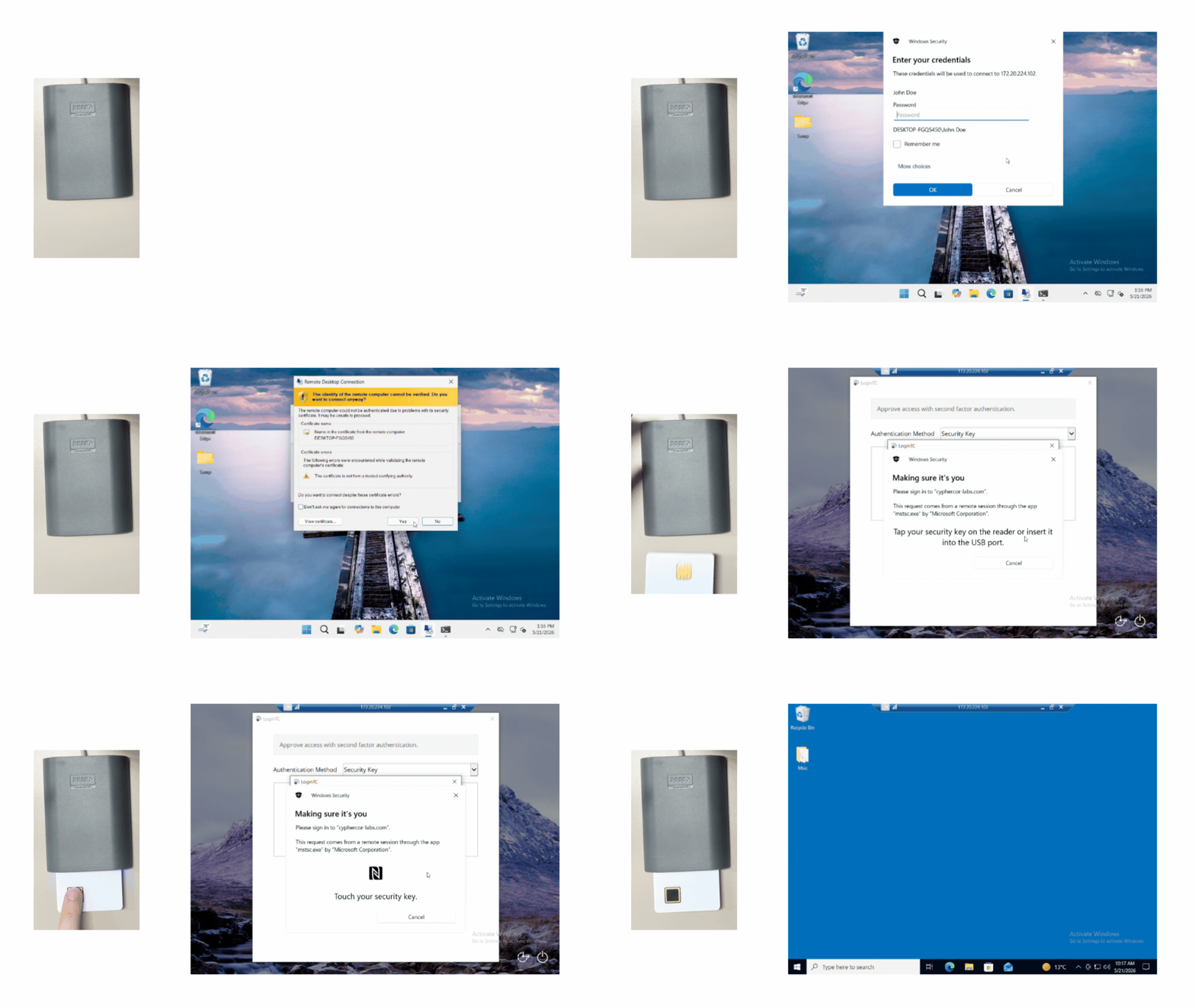
Insert to Authenticate — Windows RDP
Tap to Authenticate — Windows RDP
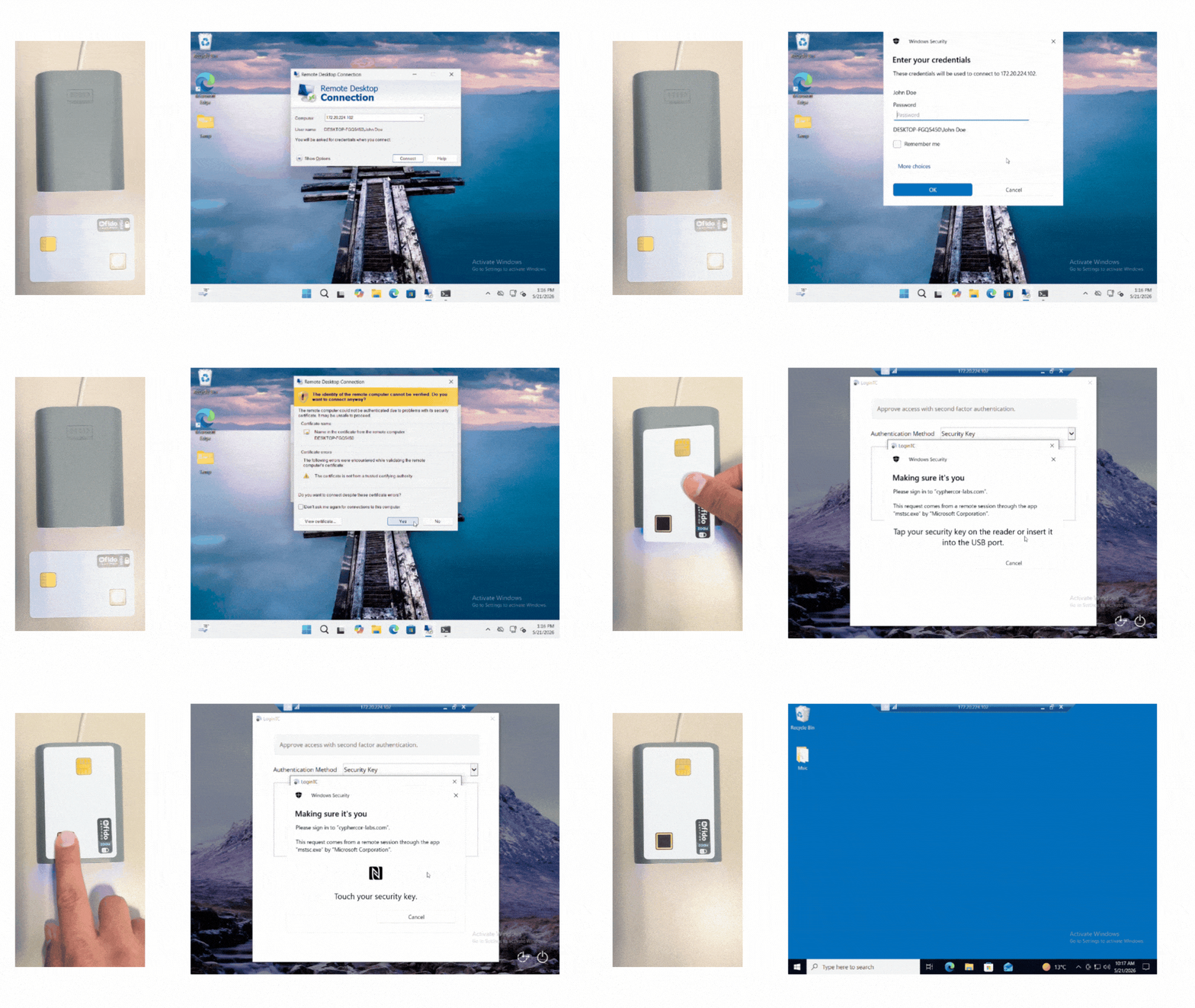
The same experience extends to Remote Desktop sessions. Users authenticate with a single card tap and fingerprint scan from wherever they’re connecting, keeping the login flow fast and consistent regardless of how they’re accessing the machine.
Next Steps
FIDO2 biometric smart card authentication with LoginTC is available to customers on the Business-tier cloud MFA plan and LoginTC Managed On-Premises MFA.
Combine LoginTC MFA with the power of biometric FIDO2 smart cards, including Dongwoon Anatech’s Fingerprint Card, to bring phishing-resistant authentication to your organization’s most critical access points. Biometric smart card authentication is compatible with the following LoginTC connectors:
- Windows Logon and RDP
- Entra ID
- Outlook Web App (OWA)
- Active Directory Federated Services (AD FS)
- RADIUS for VPNs and firewalls
Start a free trial of LoginTC today to try LoginTC for your organization.