What Are Authentication Factors? A Complete Guide
February 13, 2026 •
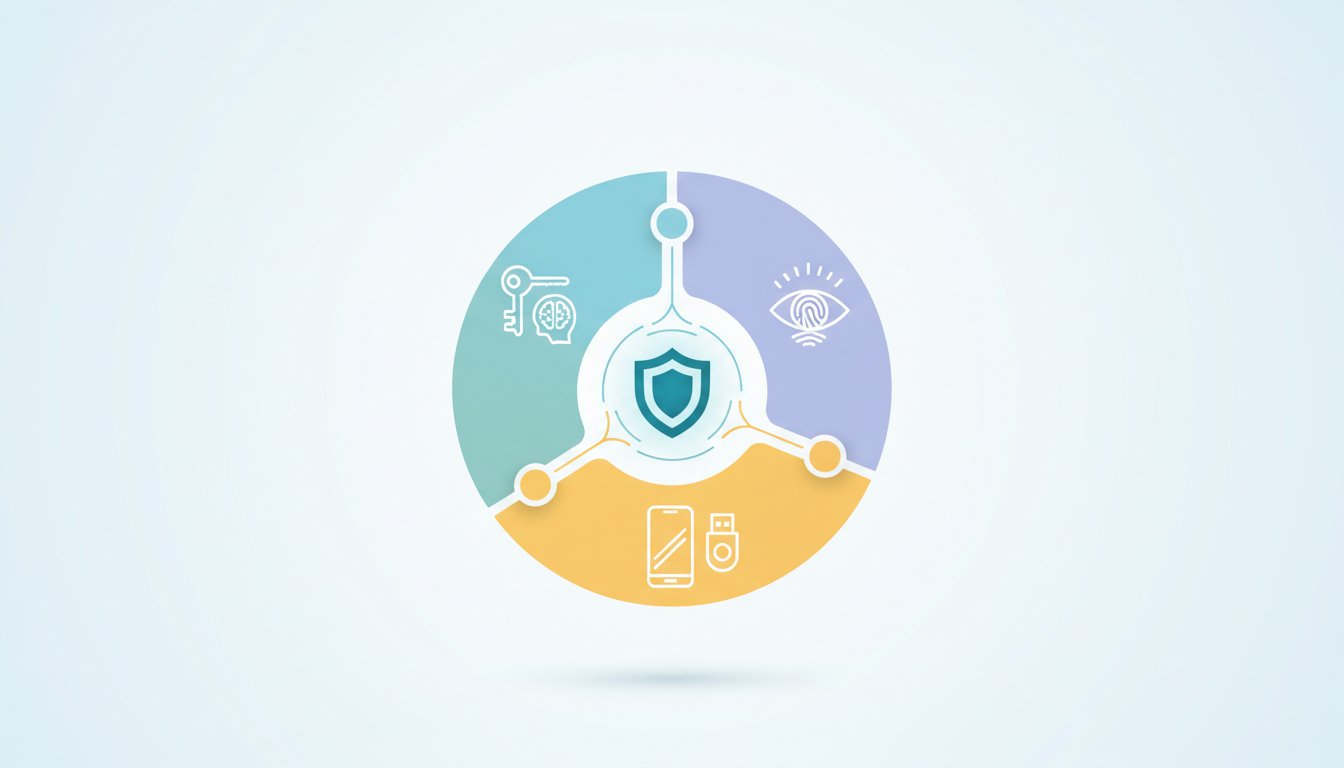
In today’s complex cybersecurity landscape, protecting your organization requires more than just a strong password. You know that Multi-Factor Authentication (MFA) is essential, but understanding the different authentication factors can feel overwhelming. If technical jargon like ‘inherence’ or ‘possession’ seems confusing, or you’re unsure how to choose the right security methods for your team, you’re in the right place. This guide is designed to make security simple and accessible, cutting through the noise to give you clear answers.
We will provide a complete breakdown of the core components of strong security. You will learn the three main categories-something you know, something you have, and something you are-and explore real-world examples, from PINs and hardware tokens to biometrics. By the end, you’ll not only understand the pros and cons of each method but also grasp how to combine them effectively. Our goal is to empower you to build a robust security strategy that delivers true peace of mind for your organization.
Key Takeaways
- Understand the three foundational pillars of identity verification-what you know, have, and are-to build a strong security base for your organization.
- Discover why single-factor security is no longer sufficient and how multi-factor authentication (MFA) provides robust protection against modern threats.
- Learn to strategically combine different authentication factors, including modern contextual signals like location and device health, for smarter security.
- Develop a practical MFA strategy that strengthens your security posture without creating unnecessary friction for your end-users.
The Three Core Categories of Authentication Factors
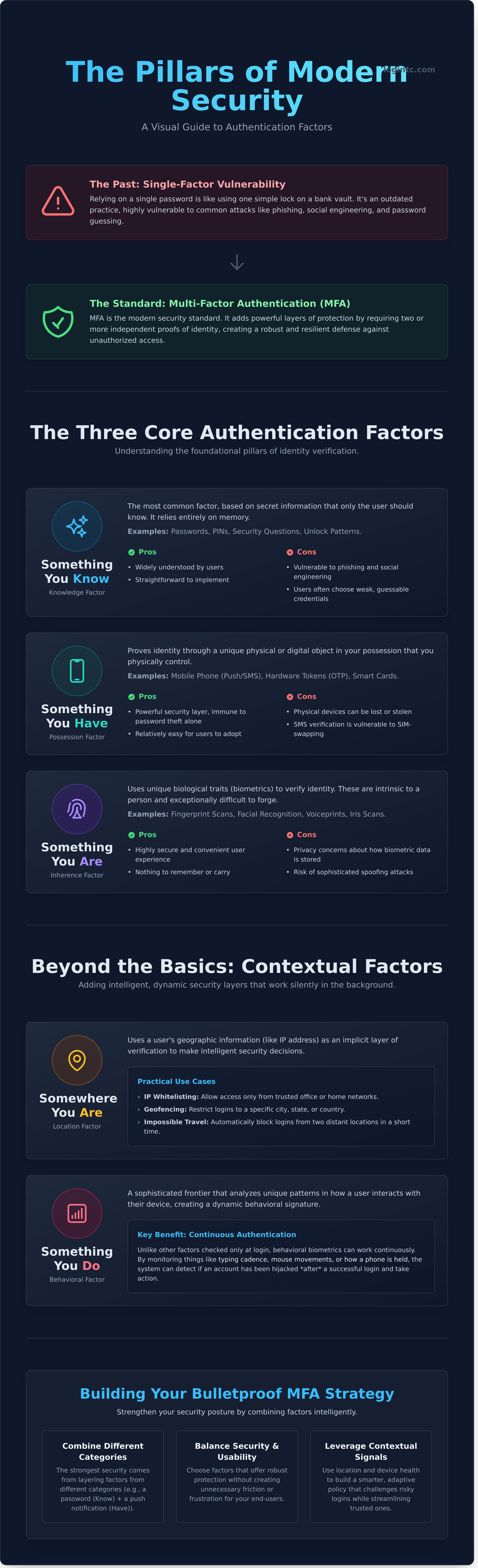
Verifying your identity online requires presenting evidence that you are who you claim to be. In cybersecurity, this evidence is organized into three distinct categories known as authentication factors. These pillars form the foundation of modern digital security, ensuring that access is granted only to legitimate users. The strength of any security system comes from layering these factors from different categories, a practice known as Multi-factor authentication (MFA).
Think of it like entering a high-security room: you need both your key card (something you have) and your PIN (something you know). One without the other is useless. This principle of combining different types of evidence is what makes your accounts and data truly secure.
Knowledge Factors: Something You Know
This is the most common authentication factor, based on secret information that only the authentic user should know. It relies entirely on your memory. Examples include passwords, personal identification numbers (PINs), security question answers, and unlock patterns.
- Pros: Widely understood by users and straightforward to implement from a technical standpoint.
- Cons: Highly vulnerable to phishing, social engineering, and brute-force attacks. Users often choose weak, easily guessable credentials.
Possession Factors: Something You Have
This factor proves your identity through a unique physical or digital object in your possession. You are validating access with something you physically control. Common examples include a mobile phone receiving a push notification or SMS code, a physical hardware token that generates a one-time password (OTP), or a smart card.
- Pros: Adds a powerful, separate security layer that cannot be breached through password theft alone.
- Cons: Devices can be lost or stolen. SMS-based verification is also susceptible to more advanced threats like SIM-swapping.
Inherence Factors: Something You Are
Inherence factors use unique biological traits, or biometrics, to verify your identity. Since these characteristics are intrinsic to you, they are exceptionally difficult to forge. Examples are becoming increasingly common and include fingerprint scans, facial recognition, voiceprints, and iris scans.
- Pros: Offers a highly secure and convenient user experience, as there is nothing to remember or carry.
- Cons: Can raise privacy concerns about how biometric data is stored, and there is a risk of sophisticated spoofing attacks.
Beyond the Basics: Emerging and Contextual Factors
Strong security is about more than just what a user knows, has, or is. While the three core authentication factor categories provide a robust foundation, modern cybersecurity threats demand a more dynamic and intelligent defense. This is where contextual factors come in. They add powerful layers of security by analyzing the situation surrounding a login attempt, not just the credentials provided.
These advanced authentication factors work silently in the background to build a risk profile for each login. The result is a streamlined, adaptive security policy that can distinguish between a trusted employee and a potential threat. You get stronger protection for your organization without adding friction to your users’ daily workflow, delivering true peace of mind.
Location Factors: Somewhere You Are
This factor uses a user’s geographic information as an implicit layer of verification. By analyzing data like an IP address, your system can make intelligent decisions based on where the login attempt originates. This is a simple, effective way to enforce access policies.
- Practical Use Cases: Common applications include IP whitelisting to allow access only from trusted networks or geofencing to restrict logins to a specific office or country.
- Key Benefit: It automatically blocks impossible travel scenarios, such as a single account logging in from two different continents within minutes. For users in known, safe locations, it reduces unnecessary friction and streamlines their experience.
Behavioral Factors: Something You Do
Behavioral biometrics represent a sophisticated frontier in security, analyzing the unique patterns in how a user interacts with their device. This goes beyond a simple password or fingerprint to create a dynamic signature of an individual’s actions.
Examples include a person’s unique typing cadence, mouse movement patterns, or even how they hold their phone. This is a developing field primarily used for continuous authentication, which works even after a user has successfully logged in. If a user’s behavior suddenly changes, the system can flag the session as high-risk, providing a powerful defense against account takeovers that occur in real-time.
Why Combining Factors is Essential for Modern Security (MFA)
In today’s complex threat landscape, relying on a single password for security is no longer a viable strategy. It represents a single point of failure that cybercriminals have become experts at exploiting. The reality is straightforward: single-factor authentication is broken. To properly protect your organization’s sensitive data and provide genuine peace of mind, security must be layered. This is the core principle behind Multi-Factor Authentication (MFA).
MFA ensures that even if one security layer is breached, others stand ready to protect your assets. It transforms authentication from a fragile, single lock into a robust, multi-layered defense system. It is no longer an optional upgrade; it is the baseline requirement for modern cybersecurity.
The Weaknesses of a Single Factor
Each type of authentication factor has inherent vulnerabilities when used alone. Attackers can compromise a single line of defense in numerous ways, including:
- Password Vulnerabilities: Credentials can be stolen through large-scale data breaches, targeted phishing emails, credential stuffing attacks that reuse stolen passwords, or malware like keyloggers that capture keystrokes.
- Possession Vulnerabilities: Physical devices like smartphones or hardware tokens can be lost or stolen. More sophisticated attacks, like SIM-swapping, allow an attacker to hijack a user’s phone number to intercept SMS codes.
- Inherence Vulnerabilities: While strong, biometric data is not infallible. It can be compromised in database breaches or, in rare cases, defeated by sophisticated spoofing techniques using high-resolution images or molds.
How MFA Creates a Strong Defense
The strength of MFA comes from combining two or more independent authentication factors. This layered approach means a compromise of one factor does not lead to a full security breach. A hacker with a stolen password still can’t log in without access to the user’s physical phone. A thief with a stolen phone is still stopped by a required fingerprint or PIN.
This principle of “never trust, always verify” is the foundation of a zero-trust security model, where access is only granted after verifying identity through multiple, proven methods. It is a simple yet powerful way to neutralize the most common cyberattacks. This is why robust on-premises MFA solutions are critical for protecting your most sensitive data and infrastructure, ensuring that your organization remains secure, compliant, and in control.
Building Your MFA Strategy: How to Choose and Combine Factors
Understanding the theory behind authentication is the first step. The next is applying it to protect your organization. A successful multi-factor authentication (MFA) strategy is a balancing act, delivering robust security without creating unnecessary friction for your users. The goal is to implement strong, layered security that feels intuitive, not obstructive.
The most effective strategies use different factors for different levels of risk. The core principle of MFA is to combine credentials from separate categories-something you know, something you have, and something you are. Using two passwords, for example, is not true multi-factor authentication; combining a password with a hardware token is.
Common and Effective MFA Combinations
Password + Push Notification: A highly common and user-friendly method. The user enters their password (knowledge) and approves a login request on their registered smartphone (possession).
Password + TOTP (Authenticator App): A strong and reliable option. After the password, the user enters a time-sensitive code from an app like Google Authenticator, which works even when the device is offline.
Passwordless (Biometrics + Device): This modern approach removes the password entirely for a seamless experience. A user might unlock an action using their fingerprint or face (inherence) on their trusted corporate device (possession).
What is Adaptive Authentication?
Adaptive authentication, also known as risk-based authentication, is a smarter approach to security. It adjusts the required authentication factors based on the real-time risk of a login attempt. For example, a user logging in from a known device on the corporate network might only need their password. However, if that same user attempts to log in from a new device in a different country, the system can adapt and require a second, stronger factor like a hardware token. This ensures security is applied when and where it’s needed most. LoginTC provides flexible MFA solutions that allow you to build and enforce these intelligent access policies with ease.
Key Considerations for Your Business
When designing your MFA strategy, your organization must evaluate several key areas to find the right fit:
- Security Needs: What level of assurance do your different applications and systems require? Access to sensitive financial data should be guarded more strictly than a company-wide portal.
- User Experience: Will your employees find the chosen methods intuitive? A streamlined user experience is critical for company-wide adoption and productivity.
- Deployment & Management: How simple is the solution to roll out and administer? An MFA solution should reduce the burden on your IT team, not add to it.
- Cost: Evaluate the total cost of ownership, including any hardware, licensing, and ongoing support.
Implementing the Right Factors with LoginTC
Understanding authentication factors is the first step. The next is implementing them effectively without disrupting your business. LoginTC provides a comprehensive MFA solution designed for both powerful security and an intuitive experience for administrators and end-users alike. Our flexible platform supports a wide range of methods, allowing you to deploy on-premises, in the cloud, or in a hybrid model that fits your exact infrastructure needs.
Our business is protecting your business. We empower you to build a layered defense by applying the right authentication factors for every situation, giving you complete control and peace of mind.
Matching Factors to Your Use Case
The most effective security strategy uses different authentication methods tailored to specific risks and systems. LoginTC gives you the control to apply the right level of protection where it’s needed most, ensuring security is always appropriate and never a burden.
- For remote access (VPN): Secure your network perimeter by combining passwords with a second factor like one-tap push notifications or durable hardware tokens.
- For sensitive internal apps: Protect critical data with advanced methods like biometrics or go completely passwordless for a streamlined, high-security workflow.
- For legacy systems: Extend modern MFA to older applications and hardware using our versatile RADIUS and LDAPS connectors without requiring an overhaul.
See how LoginTC’s product supports these diverse security needs and more.
Making Security Simple and Strong
Cybersecurity is complex, but we make its implementation easy. LoginTC simplifies the management of sophisticated security policies into a single, straightforward platform. Our focus on rapid deployment means your organization can be protected in hours, not weeks.
We provide expert guidance to help you design the best MFA strategy for your business, ensuring you get the most value from your investment. With our transparent pricing models, you get powerful protection without hidden costs or surprises. Secure your organization with an MFA solution that just works.
From Theory to Practice: Secure Your Organization with Stronger Authentication
Understanding the core categories of authentication is the first step, but true security is achieved through decisive action. As we’ve explored, combining different factors into a robust Multi-Factor Authentication (MFA) strategy is essential for protecting your organization’s sensitive data from modern threats. The goal is to build a layered defense that is both powerful and intuitive for your entire team.
Implementing this level of security doesn’t have to be complex. LoginTC makes it easy to deploy a comprehensive MFA solution tailored to your business. Our ISO 27001 Certified platform allows you to choose and combine the right authentication factors for a seamless user experience. With rapid deployment in as little as an hour and hands-on support from our cybersecurity experts, securing your organization is straightforward and effective.
Ready to put your knowledge into action? Start your free trial today and secure your organization. Take the next step toward achieving simply strong security and true peace of mind.
Frequently Asked Questions About Authentication Factors
What is the difference between authentication and authorization?
Authentication is the process of verifying your identity to prove you are who you say you are. Think of it as showing your ID badge to a security guard. Authorization happens after you are authenticated; it is the process of determining what specific files, data, or applications you are permitted to access. This is like the guard granting you access to specific rooms based on the clearance level on your badge. Authentication confirms identity, while authorization grants permissions.
Are SMS text codes a secure authentication factor?
While using SMS codes is better than relying on a password alone, it is no longer considered a highly secure method. This approach is vulnerable to attacks like SIM swapping, where a cybercriminal hijacks your phone number to intercept authentication codes. For stronger security that provides true peace of mind, we recommend using more robust methods like authenticator apps (TOTP) or hardware tokens, which are not susceptible to this type of attack.
How many authentication factors are enough for strong security?
Strong security is achieved by using at least two distinct authentication factors from different categories: something you know (password), something you have (phone or token), and something you are (biometrics). This is the core principle of Multi-Factor Authentication (MFA). Adding more factors isn’t always better, as it can create unnecessary friction for users. The goal is to implement a streamlined MFA strategy with two or more strong, independent factors to secure your assets effectively.
What is considered the single most secure authentication factor?
The gold standard for a single authentication factor is a FIDO2-compliant hardware security key. These physical devices, such as a YubiKey, use public-key cryptography and are fundamentally resistant to phishing and man-in-the-middle attacks because the private key never leaves the device. They represent the “something you have” category in its most secure form, providing a level of protection that software-based methods simply cannot match for high-value systems.
Can biometric authentication factors like Face ID be spoofed?
While biometric authentication factors like Face ID and fingerprint scanners are highly advanced, no method is entirely foolproof. It is theoretically possible to spoof them with sophisticated techniques like high-resolution 3D masks or replicated fingerprints. However, modern systems include advanced “liveness detection” to prevent this, making such attacks extremely difficult and impractical for most attackers. For organizations, biometrics remain a strong and highly convenient security layer.
What is the difference between 2FA and MFA?
Two-Factor Authentication (2FA) is a specific type of Multi-Factor Authentication (MFA). The term 2FA means you are using exactly two factors to verify your identity-typically your password plus a second factor like a push notification. MFA is the broader category that requires two or more factors. Therefore, all 2FA is a form of MFA, but an MFA system could be configured to require three or more factors for even higher security environments.
What is a ‘passwordless’ authentication experience?
A passwordless experience allows users to log in securely without ever typing a traditional password. Instead of a password, identity is verified using other secure factors, such as a biometric scan on a smartphone, a push notification approval, or tapping a physical security key. This method provides an effortless, intuitive user experience while simultaneously increasing security by eliminating the primary target of phishing attacks: the user’s password.